
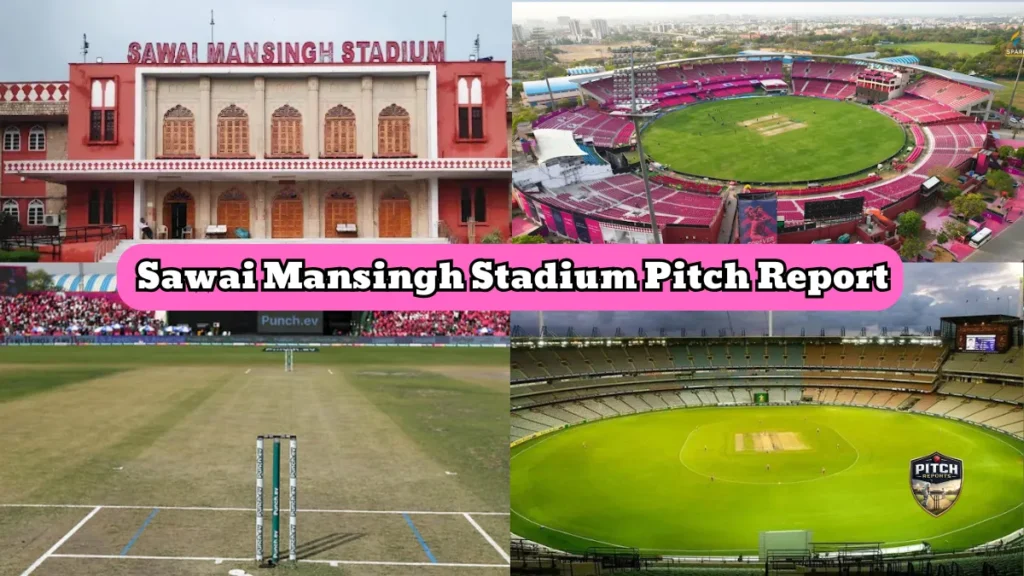
Sawai Mansingh Stadium Pitch Report: Hello friends, today we are going to discuss the pitch report for the Sawai Mansingh Stadium. Located in Jaipur, Rajasthan, the Sawai Mansingh Stadium features a balanced pitch surface that tends to offer a distinct advantage to the team chasing the target.
Jaipur’s Sawai Mansingh Stadium stands as one of India’s most renowned cricket grounds, representing a perfect blend of rich history and modern cricketing identity. Today, it is widely recognized as the home ground of the Rajasthan Royals in the Indian Premier League. Speaking from my own experience, this stadium has undergone a remarkable transformation over the past few decades evolving from a relatively quiet international venue into a vibrant hub for T20 cricket.
Tracing its history and origins, the stadium made its debut in international cricket during the 1983–84 season with a One Day International (ODI) match between India and Pakistan; however, it did not garner significant global recognition during its early years. A solitary Test match was played here in February 1987-a fixture remembered as much for its political significance as for the cricket itself. Pakistan’s then-President, Zia-ul-Haq, visited India to witness this match under the “Cricket for Peace” initiative a rare diplomatic endeavor facilitated through the medium of sport.
Regrettably, that Test match failed to yield a decisive result. The game was disrupted by heavy rainfall, and a controversy erupted over allegations regarding the use of sawdust on the pitch charges leveled by the Pakistani team. Consequently, the match ended in a draw, and for several years thereafter, no international cricket matches were played at this venue.
A Resurgence Under the Leadership of Lalit Modi
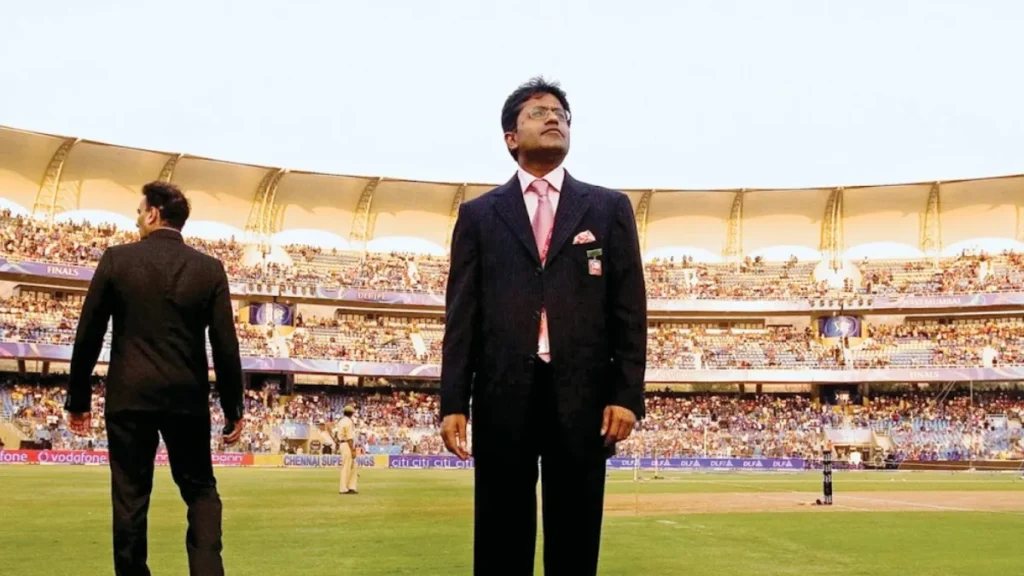
The stadium’s fortunes began to turn once again when Lalit Modi assumed the leadership of the Rajasthan Cricket Association. As part of an extensive renovation program, the ground was completely revamped and given a brand-new look. Its infrastructure underwent significant improvements, transforming what was once considered a simple concrete structure into a modern cricket facility. The establishment of a cricket academy further enhanced its long-term significance.
This transformation played a pivotal role in bringing major tournaments back to Jaipur. Notably, the stadium hosted matches during the 2006–07 ICC Champions Trophy, signaling its return to the international stage and its growing prominence.
The IPL Era: The Dawn of a New Chapter
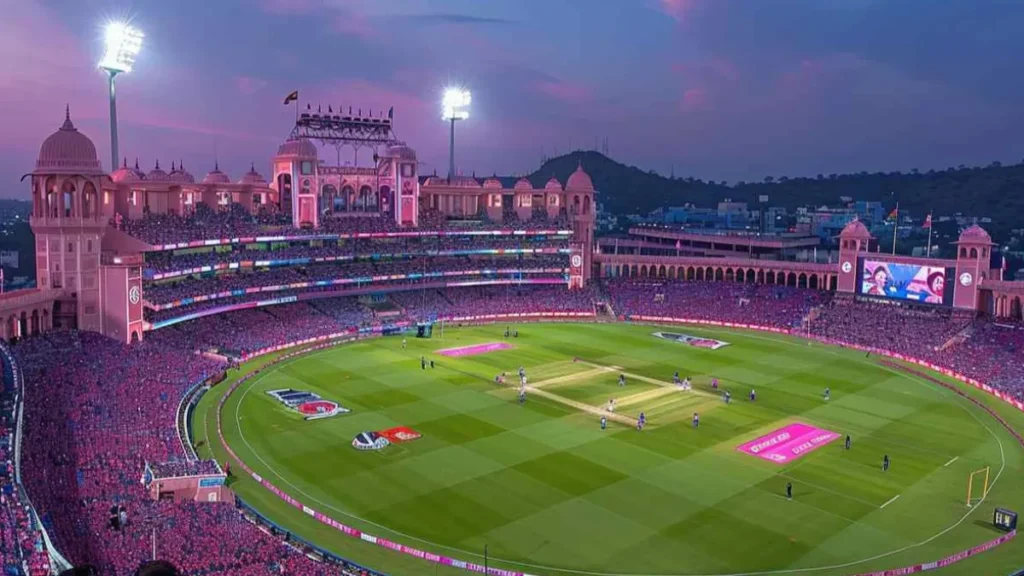
The true turning point for the Sawai Mansingh Stadium arrived in 2008 with the inception of the IPL. On April 21 of that year, Jaipur hosted the first IPL match in its history; in this contest, the Rajasthan Royals successfully chased down a target of 166 runs against Kings XI Punjab (now Punjab Kings), securing a six-wicket victory. Since then, over 60 IPL matches have been played at this venue, revealing a distinct pattern regarding the behavior of the pitch. Pitch reports for the Sawai Mansingh Stadium consistently indicate a surface that offers a fair contest between bat and ball, with teams batting in the second innings often enjoying a slight advantage.
Pitch Behavior: What to Expect
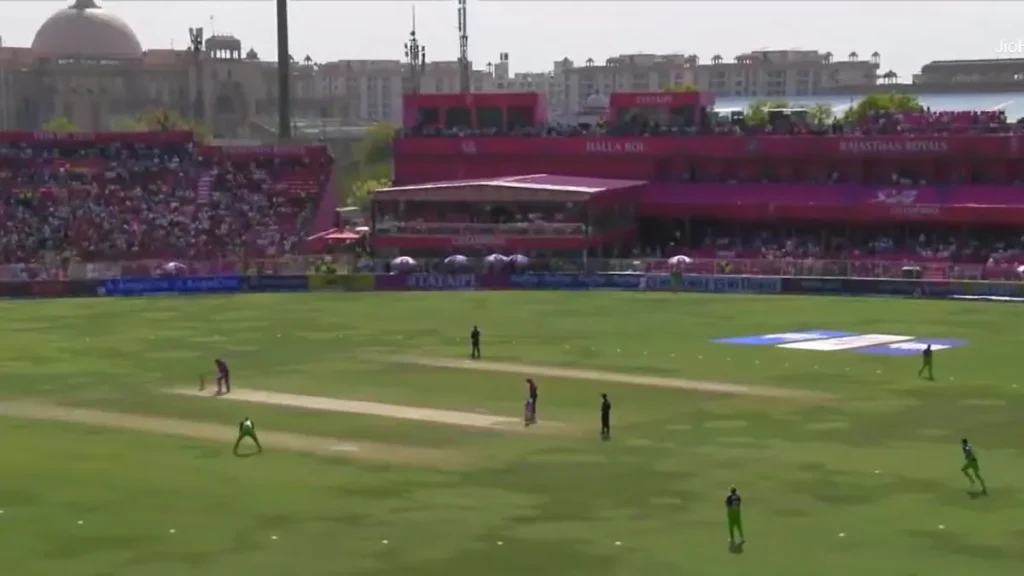
Pitch reports for the Sawai Mansingh Stadium highlight a surface that is generally balanced, yet significantly influenced by match conditions—particularly during Day-Night fixtures.
Batting Conditions
Batsmen often find the pitch favorable once they have settled at the crease. The bounce typically remains consistent, allowing stroke-makers the freedom to play their shots freely. However, unlike some of the other flat tracks found in the IPL, Jaipur does not always witness exceptionally high-scoring matches.
The average first-innings score at this venue stands at approximately 166 runs, suggesting that while posting a massive total is certainly possible, it is by no means guaranteed. The 200-run mark has been breached in only a handful of matches, reflecting the relatively restrained scoring environment of the pitch.
Advantage to Chasing Teams
The most distinctive trend at this stadium is the success rate of teams batting in the second innings. Out of the 65 IPL matches played here, 42 have been won by teams chasing the target-amounting to a success rate of over 64 percent. This clearly indicates that the pitch tends to ease up slightly under the floodlights at night, making it more conducive for chasing down targets.
Dew often plays a pivotal role in evening matches, diminishing the bowlers’ grip on the ball and providing an advantage to the batsmen during the second innings.
Assistance for Bowlers
Despite occasionally being perceived as a batting-friendly surface, this pitch also offers significant assistance to bowlers. Depending on the prevailing conditions, both fast bowlers and spinners are able to extract movement from the ball.
Fast bowlers benefit from early seam movement, particularly with the new ball.
Spinners come into play during the middle overs, especially as the pitch tends to slow down.
It is this dual nature that makes the pitch report for the Sawai Mansingh Stadium so intriguing—it does not disproportionately favor one department over the other.
Key IPL Records at Sawai Mansingh Stadium
Over the years, numerous memorable performances have defined the stadium’s IPL history.
The highest individual score at Sawai Mansingh Stadium belongs to Virat Kohli, who scored an unbeaten 113 runs during the 2024 IPL season.
In terms of the best bowling figures, the record is held by Sohail Tanvir, who claimed figures of 6/14 for the Rajasthan Royals against the Chennai Super Kings in 2008.
The highest team score recorded at the venue is 229/5, posted by Sunrisers Hyderabad during the 2026 IPL season.
At the other end of the spectrum, the Rajasthan Royals were bowled out for a mere 59 runs during the 2023 IPL season a performance that highlights the unpredictable nature of the pitch.
Based on my analysis and research, these contrasting statistics underscore a significant conclusion: depending on the prevailing surface conditions, the Jaipur pitch can produce both high-scoring thrillers and low-scoring contests.
Statistical Overview
Average Runs Per Wicket: 29.69
Average Runs Per Over: 8.39
Average Strike Rate: Approximately 137
Matches Won Batting First: 23
Matches Won Batting Second (Chasing): 42
Interestingly, the team that won the toss has emerged victorious approximately 57 percent of the time. This suggests that while chasing a target may not be the most favorable option on this pitch, a team’s overall performance ultimately plays the decisive role.
Also Read: Eden Gardens Pitch Report 2026: A Complete Guide to Researched Pitch Reports for Cricket Lovers
The Role of the Large Outfield
Another distinctive feature of this stadium is its expansive outfield, which ranks among the largest across all IPL venues. The direct impact of this on scoring is as follows:
The sheer size of the ground is also a primary reason why scores exceeding 200 are observed less frequently here compared to other IPL venues.
Top Performers in Jaipur
Several players have established exceptional records at this venue, making it a significant and memorable part of their respective IPL careers. Speaking of Ajinkya Rahane, he is the highest run-scorer at this stadium; Rahane has amassed over 1,100 runs in IPL matches played here.
Siddharth Chaudhary holds the record for taking the most wickets at this venue; he has claimed a total of 36 wickets here.
Final Verdict: What the Pitch Says
This pitch tends to favor the team chasing the target, particularly in matches played under the lights.
Batsmen can certainly post a substantial score here, but they have to work hard to accumulate their runs.
Whether it be fast bowlers or spinners-both have ample opportunities to make a significant impact on the game.
Also Read:Narendra Modi Stadium Pitch Report